
How To Say Goodbye In Russian
If you’re a student of Russian, let’s first acknowledge what it took for you to even get past “hello.” The formal greeting — З
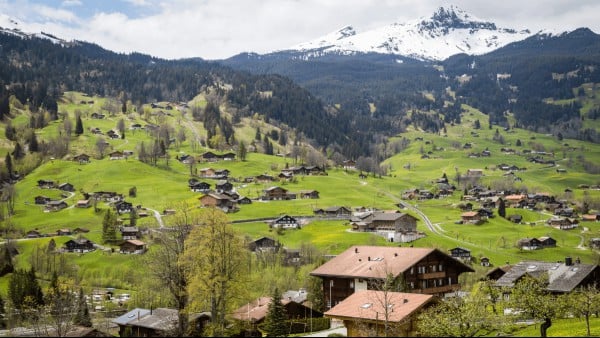
Switzerland has a population of around 8.5 million people, who live in an area about the size of the tiny U.S. states of Vermont and New Hampshire combined. And yet, there are four official languages spoken among them. In addition to Standard German (sometimes called High German, or Hochdeutsch), French, Italian and Romansh are spoken here. So where does Schweizerdeutsch — or Swiss German — come in, you may ask? That’s a story in and of itself, and involves knowing the difference between a language and a dialect.
First, we need to distinguish between the two concepts Schweizerdeutsch and Schweizer Hochdeutsch (Swiss High German). They sound a bit similar, and are often used interchangeably among the Swiss, but they’re not identical.
Schweizerdeutsch (Swiss German) is actually not a single language variation, but rather includes all possible Alemannic dialects that are spoken in the German-speaking region of Switzerland. The word Alemannic refers to German as well as West Germanic dialects. That is, the concept of Schweizerdeutsch simply means: all the German dialects spoken in Switzerland. Thus, it can’t count as an official language in Switzerland.
At the same time, Swiss High German is not a stand-alone language, either. This might be apparent in the term “High German” (Hochdeutsch). Swiss High German — just like Austrian High German — is a variation of Standard German. This means that it’s a variant of the German language with its own specific and codified rules that clearly define what is correct and incorrect. These rules, by the way, are set and maintained by the Swiss Association for the German Language. And don’t worry about getting confused: The High German that is spoken in Germany is also a standard variant and operates on the same level as Swiss High German.
Now, when it comes to Schwizerdütsch, we’re already elbow-deep in dialect, as that is just the Schweizerdeutsch pronunciation of the word Schweizerdeutsch. This can, of course, also vary a bit by region, and in certain circumstances, you may also see or hear it referred to as Schwiizertüütsch.
As with most standard variants, Swiss German does present some differences in various linguistic areas, such as grammar, pronunciation and vocabulary. Words or expressions that are recorded by the Swiss Duden Committee are called Helvetismen, or Helveticisms. Many of these Helveticisms are mutually understandable to native (Germany-based) German speakers, but others are a bit tougher to figure out.
Because of Switzerland’s proximity to France, Helveticisms also include some words that are either borrowed from the French or appropriated with Swiss pronunciation. That’s why in Switzerland, a bicycle isn’t ein Fahrrad, it’s ein Velo; a ticket is not eine Fahrkarte, it’s ein Billet; and many people thank each other with a merci, which in the Swiss pronunciation emphasizes the first syllable (unlike in the French, which emphasizes the last). (By the way, such Helveticisms have been used in Germany; a ticket was a Billet until the end of the 19th century.)
Given that there are numerous dialects in the German-speaking region of Switzerland alone, the pronunciation varies depending on where you are. We can, however, locate a few general examples, especially if you look at Schwizerdütsch. Probably the best-known mannerism of this variant is the “k” that is pronounced in many dialects with a [ch] sound similar to the Standard German [ch] in the word Buch (book). That means a child (Kind) is pronounced like [chind], and in winter it can be [chalt] (cold); even a Sack sometimes sounds like a [sakch].
In addition, many common word endings are pronounced differently. For example, the “-ung” that ends words such as die Richtung (direction) or die Kreuzung (crossing). In this case, these are pronounced [richtig] and [kreuzig]. The –e at the end of some words also often falls away, which may be familiar to some speakers of dialects in Germany: Trees (Bäume) are [bäum], and people (Leute) are [leut].
Another big difference from Hochdeutsch is the pronunciation of vowels, especially if a word contains a diphthong, or two vowels together. What you can still see in the written language, but isn’t pronounced aloud anymore in Hochdeutsch, has in some cases remained pronounced in Switzerland. For example, the word for love, Liebe, is pronounced [li-be] in Germany but [li-ebi] in Switzerland. However, in contrast to this, the word for house (Haus) is pronounced without the dipthong, [huus], in many Swiss dialects, as is the word for far, weit, which is pronounced [wiit]. These particularities go back to Middle High German, which was spoken from around 1050 to 1350.
According to a survey, many Swiss view Hochdeutsch more like a foreign language, and in many contexts of everyday life — with the exception of school lessons and some professions — they primarily speak Schweizerdeutsch. At the same time, this can also lead to communication problems, as Swiss from other regions of the country learn only Hochdeutsch in school, and no Swiss German dialects. As a result, in professional environments, it is English that is actually gaining wider use. With this come not only efforts to support the use of Hochdeutsch in Switzerland, but simultaneous fears that the dialects will be repressed.
This article was originally published on the German edition of Babbel Magazine.

If you’re a student of Russian, let’s first acknowledge what it took for you to even get past “hello.” The formal greeting — З
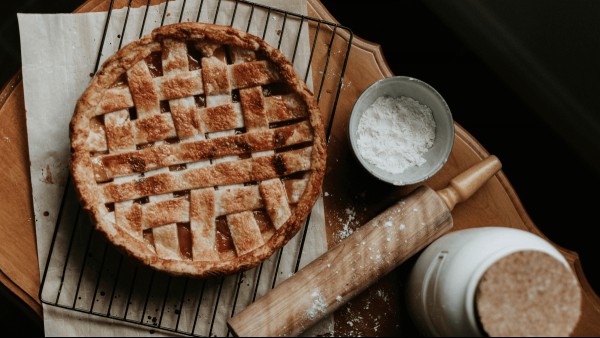
If you strip pie down to its bare basics — the Platonic Pie, if you will — the concept is extraordinarily simple. It’s a crust of some sort filled wit
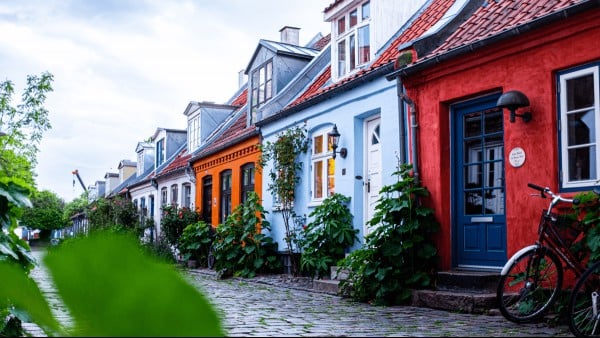
As a beginner on your quest toward Danish literacy, you might be weighing whether you have sufficient reasons to learn Danish. It’s definitely n
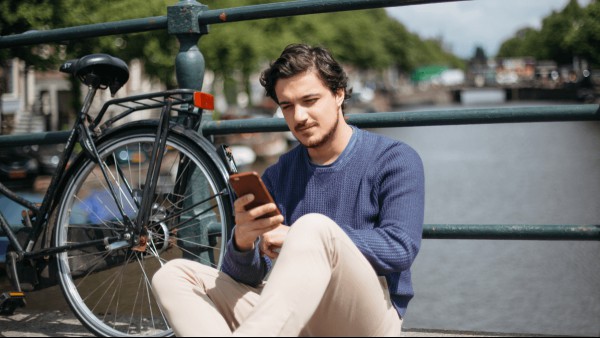
When you’re learning a new language, the dream is usually to interact with people in person. For some, though, a trip to the Netherlands isnR

When you’re learning Dutch, it’s important to find the right mix of work and play. We won’t sugarcoat the fact that learning grammar

Depending on how you look at it, January 1 might be just another day. But there’s something about flipping the calendar to a brand new year. It
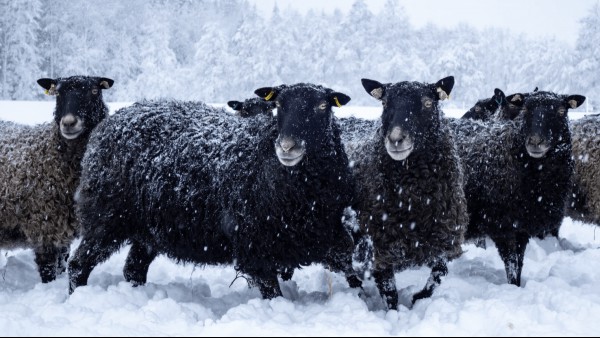
Imagine waking up and going to work in pitch darkness. Just before lunchtime, the sun is rising, only to set again some time after your lunch break. Y

The anti-productivity movement is taking hold, particularly within the breathless culture of hustle and self-improvement that is the United States. Th
We are a comprehensive and trusted information platform dedicated to delivering high-quality content across a wide range of topics, including society, technology, business, health, culture, and entertainment.
From breaking news to in-depth reports, we adhere to the principles of accuracy and diverse perspectives, helping readers find clarity and reliability in today’s fast-paced information landscape.
Our goal is to be a dependable source of knowledge for every reader—making information not only accessible but truly trustworthy. Looking ahead, we will continue to enhance our content and services, connecting the world and delivering value.