
How To Talk Like A Pirate On Talk Like A Pirate Day
The calendar has become inundated with Days. While there used to be pretty much just Mother’s Day, Father’s Day and a few others, today there’s a Nati
As writers at Babbel, we love to read and accentuate the importance of books being accessible to everyone. We’re big proponents of libraries, internet resources and whatever other services help people find information and literature. But we never thought of a boat as a potential means of reaching that goal. Book boats are a thing, though. Various countries and organizations use floating libraries and bookstores to access underserved or hard-to-reach places, ensuring people all over the world have access to writing in their language. Here are five of the book boats bringing the written word to the remote corners of the world.
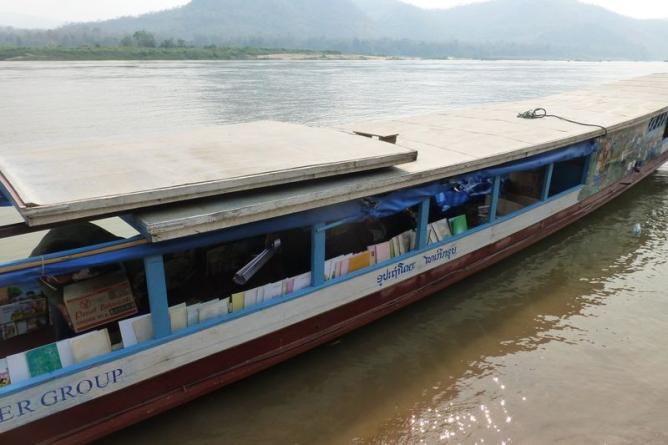
These two wooden longboats travel up and down Laos’ Mekong and Nam Ou rivers, stopping at 104 small villages along the way. Laos has a somewhat high rate of illiteracy (though it’s slowly falling), and the remote villages along the Mekong and Nam Ou are strongly affected by lack of access to education. The floating libraries were implemented as a joint project by the Luang Prabang Library and the education non-profit Community Learning International, and each one houses (er, boats?) more than 1,000 books, primarily in the Lao language.
A typical day goes something like this: The boat arrives at a village in the morning. School is dismissed and the kids rush aboard, choosing books to read for the rest of the day (and when night falls, some continue reading by candle light). The children return the books the next morning and the boat departs for its next stop, often leaving behind bags of books in local schools. In addition to lending books to children who otherwise would have no access to reading material, the boat staff also teaches life skills classes and leads learning activities throughout the day.

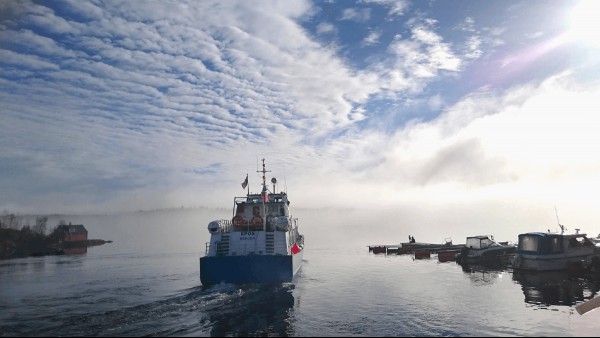
The 85-foot Epos has been sailing along the west coast of Norway since 1963. Built as a floating library, the vessel makes stops at around 150 communities in the counties of Hordaland and Møre og Romsdal, many of which are quite remote and cut off by fjords, making them most easily accessible by boat. The Epos carries approximately 6,000 books (as far as book boats go, this is a lot), and it also has space for cabins and a dining room for the crew. The boat serves as a floating library from September to April. During the summer months, it’s used to transport tourists.
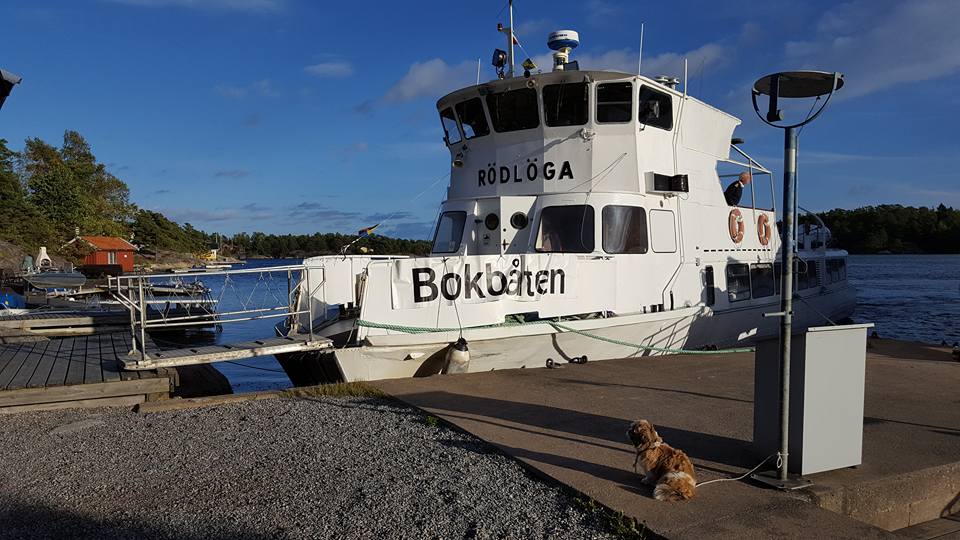
It turns out Scandinavians are big proponents of book boats, so we’re staying in the region for this next one: the Bokbåten that was operated by Stockholm County Library in Sweden until 2018, when it came under the jurisdiction of the Norrtälje municipality. The boat does a week-long tour of the islands in the region twice a year: once in the spring and once in the fall.
Typically, books from the boat’s collection of 3,000 titles are loaned out during the spring tour and returned in the fall, giving locals the entire summer to read them. There are three librarians on board who provide tips and recommendations.
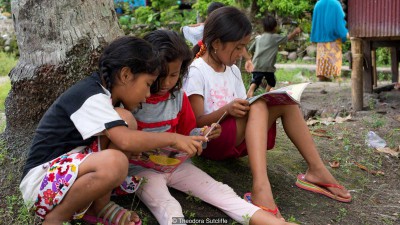
In Indonesia, more than 10 percent of the adult population is illiterate and access to books is virtually nonexistent. Indonesia has thousands of islands, which can certainly hinder accessibility. Local journalist Muhammad Ridwan Alimuddin quit his job to help address this issue by creating a floating library on a small sailboat.
The Perahu Pustaka travels around the West Sulawesi region of Indonesia and surrounding areas, delivering books to children on small islands and in remote coastal villages. The boat’s collection of around 4,000 books relies entirely on donations, which allows Alimuddin to spread his love of reading to the children of Indonesia.
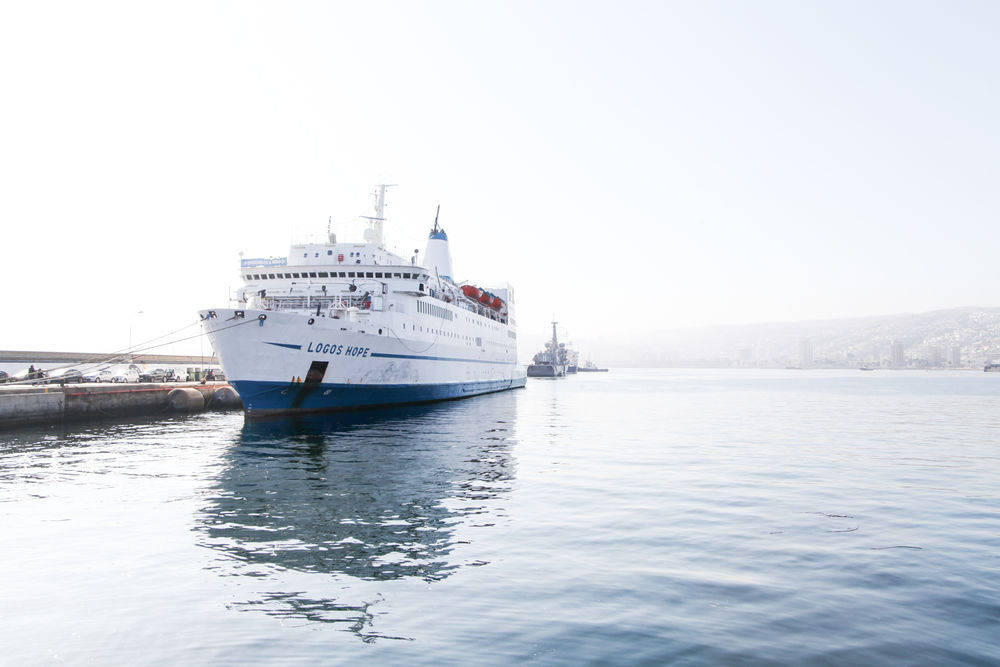
German charity GBA Ships, which stands for Gute Bücher für Alle (“Good Books for All”), operates the Logos Hope, a large ship that has traveled to more than 150 countries and territories around the world. The ship serves as a floating bookstore, stopping at ports for about two weeks at a time, where hundreds of visitors go on board and can purchase books at heavily discounted prices.
Logos Hope carries about 5,000 books, most of which are in English, but some are in various other languages as well. According to GBA Ships, for many of their visitors it’s “their first-ever opportunity to purchase quality literature.” The ship also hosts conferences and events on board, and crew members spend time in each port community meeting with locals and providing aid and donations when needed.
Header Image: Bokbåten Epos Facebook

The calendar has become inundated with Days. While there used to be pretty much just Mother’s Day, Father’s Day and a few others, today there’s a Nati
If you’re American, you may be conditioned to apologize more than the average world citizen. But “I’m sorry” is never a superf

Animal names color the whole world when we’re young. Not only do creatures live in the environment around us, but they’re in children’s books, c

Imagine waking up and going to work in pitch darkness. Just before lunchtime, the sun is rising, only to set again some time after your lunch break. Y
Subscribe to Un día en español: A Spanish learning podcast on Apple Spotify Google or wherever you listen. See all epi

Pop quiz! Which word in each of these pairs is funnier: War or booty? Sctori or rembrob? Tomato or pickle? If you had to rank them, what would be the
As two of the most-spoken languages in the world, Spanish and English run into each other quite a bit. It’s no surprise, then, that certain Spanish wo

People are naturally fascinated by Switzerland — and this admiration isn’t just a love for chocolate and mountain walks (all right, maybe a litt
We are a comprehensive and trusted information platform dedicated to delivering high-quality content across a wide range of topics, including society, technology, business, health, culture, and entertainment.
From breaking news to in-depth reports, we adhere to the principles of accuracy and diverse perspectives, helping readers find clarity and reliability in today’s fast-paced information landscape.
Our goal is to be a dependable source of knowledge for every reader—making information not only accessible but truly trustworthy. Looking ahead, we will continue to enhance our content and services, connecting the world and delivering value.