
A Cultural History Of Pie
If you strip pie down to its bare basics — the Platonic Pie, if you will — the concept is extraordinarily simple. It’s a crust of some sort filled wit
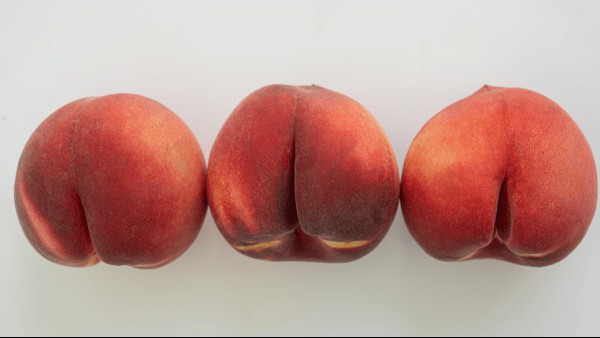
Imagine being new to the English language and learning that “badonkadonk” is a suitable alternative for “buttocks” in the right context. Now imagine the sheer possibilities contained within all the other words for butt around the world. The fundament is a fundamentally ripe area for verbal creativity. It’s a treasure trove of vocabulary rivaling any pirate’s booty.
We don’t all speak each other’s languages, but there’s no need for anyone to feel left behind. If you’re a fan of fanny speak, here are some new words you can throw in your trunk — for like, good luck and stuff.
Le cul — A pretty standard butt word in French that also makes you think twice about the word cul-de-sac.
Le derrière — You’ve probably used this one in English before. Use this if you’re trying to be polite.
Le séant — This is an old-fashioned term often used in a bourgeoisie context, as in “le royal séant.”
Le popotin — “Butt,” but for children and/or someone you’re on nickname basis with.
Les miches — Literally “bread loaves,” but also slang for “buns.”
Les parties charnues — “The fleshy parts.”
Arse — “Arse” is the British (and Australian, and Kiwi) equivalent to the American “ass.” As with most things British versus American, “arse” is a much older way to refer to the buttocks that tracks all the way back to Old Germanic roots. “Ass” used to solely refer to the animal, but it became a butt word in the 19th century, mostly in the United States. Believe it or not, though, “arse” used to be a polite word.
Blurter — An Australian English invention derived from “blurt,” or “to emit breath eruptively.”
El culo — This is your standard textbook definition for “ass,” and you can make it cuter by saying it in its diminutive form, el culito. Spanish is also chock full of regionalisms, which brings us to…
Las nachas — This is a term you’ll hear in Mexican Spanish that’s actually a play on words that’s derived from las nalgas, which is common in Latin America. Tread carefully when you’re ordering nachos for the table.
El poto — Used primarily in Argentina, Chile and Peru.
Las posaderas — Common throughout Latin America.
El fuiche — More common in the Dominican Republic.
Tuchus — You’ve heard of schmuck. You’ve heard of schvitz. Now, you can pepper your speech with tuchus too.
Der Arsch — This is the German equivalent of “arse.” Remember, German and English are offshoots of the same ancient language, and “arse” is a tale as old as time. This might seem straightforward and tame, but there’s a lot you can do with one basic bit of vocabulary.
Der Hintern — For when referring to someone’s “backside” or “seat” might be more appropriate (most likely in the context of a kick or a smack?).
Sitzfleisch — Literally “seat meat.” This is obviously a much less sexy word, as it has a double meaning associated with sitting at your desk buried deep in work, but it’s generally meant as a compliment for someone who’s got staying power and concentration.
Popo — This has absolutely nothing to do with the police and everything to do with one’s lawful booty.
Göt — If you’re feeling more vulgar, this word derives from an Ottoman Turkish word for “back of a pack animal.”
엉덩이 (eongdeong-i) — A general, all-purpose term to serve most of your “butt” needs.
궁둥이 (gungdung-i) — A more colloquial term that refers to the “cheeks.”
Bumbum — Not to be confused with the titular Tom Green song (which was popular for some reason?), bumbum is a cute word for your bumbum in Portuguese.
Nádegas — A “booty” or a “rump,” if you will.
Bunda — In Brazil, you may also hear other words for butt than you would in Europe. Bunda is one of them.
屁股 (pìgu) — This is probably the most common term for “ass” you’ll encounter in Mandarin.
屎窟 (shǐ kū) — This Cantonese term literally translates to “excrement cave.” It’s not really for polite company.
Il culo — As in French and Spanish, Italian has a culo as well.
Le natiche — For a slightly more old-school, poetic flair (think: “fundament”).
Cztery litery — Literally “four letters.” Why four letters? Because dupa, another common word for “butt,” has four letters. Dupa might be considered somewhat offensive to the elderly, which explains the euphemism.
Some other words for butt in Polish: zadek, zad, pupa, kuper
Задница (zadnitsa) — This word blends the connotations of “behind” and “ass.”
Попа (popa) — Попа or, in its diminutive form, попка (popka), is the word you’d use around children or your beloveds.
Жопа (zhopa) — A slightly more crass variation.
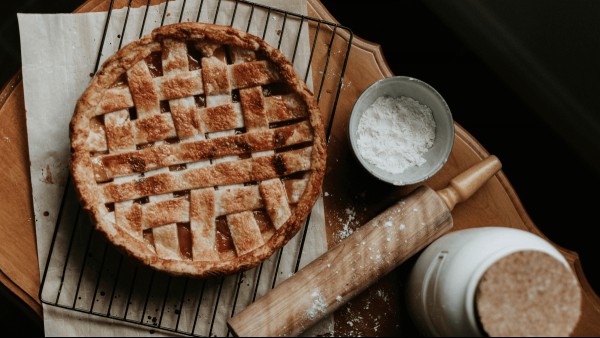
If you strip pie down to its bare basics — the Platonic Pie, if you will — the concept is extraordinarily simple. It’s a crust of some sort filled wit

Animal names color the whole world when we’re young. Not only do creatures live in the environment around us, but they’re in children’s books, c

With over 100 million speakers, German is currently the most spoken language in the EU. But where does German — with its complex grammar and endless v

Norwegian culture is like pretty much every other culture in the sense that family is a pretty big deal. But norms around living arrangements and fami
Imagine being new to the English language and learning that “badonkadonk” is a suitable alternative for “buttocks” in the righ

English and Italian share a decent amount of language between them. Part of this is because Italian is a direct descendant of Latin, and Latin and Eng

While streaming options have changed a lot about the television industry in the past few years, perhaps the most remarkable development is access to n

When I was in middle school, I ran with a group of friends so tight that kids called us “the groupies.” I didn’t really understand what that meant—bei
We are a comprehensive and trusted information platform dedicated to delivering high-quality content across a wide range of topics, including society, technology, business, health, culture, and entertainment.
From breaking news to in-depth reports, we adhere to the principles of accuracy and diverse perspectives, helping readers find clarity and reliability in today’s fast-paced information landscape.
Our goal is to be a dependable source of knowledge for every reader—making information not only accessible but truly trustworthy. Looking ahead, we will continue to enhance our content and services, connecting the world and delivering value.