
5 Turkish TV Shows You Can Stream To Help You Learn The Language
Learning a language like Turkish may provoke fears of not having as many opportunities to be immersed in the language. While it may be more difficult
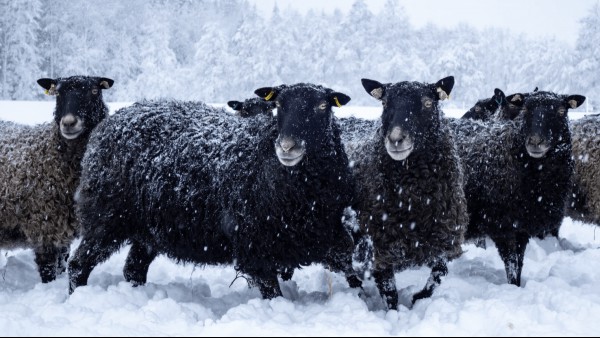
Imagine waking up and going to work in pitch darkness. Just before lunchtime, the sun is rising, only to set again some time after your lunch break. You go home from work in darkness and wake up again fourteen hours later — still in the dark. It may not sound very appealing, but this is what winter is like for large parts of northern Europe. This is also why the average Scandinavian and Russian winter is full of holidays and feasts.
Celebrations and small rituals are a way to cope with the long, dark, night of the soul that is a northern Europe winter, and we can all learn something about keeping our spirits high when the weather outside is harsh and unforgiving.
Take the Swedes for instance. They light candles and gather at home for some mys, or coziness (it’s probably no small coincidence that many neighboring countries have their own version of cozy culture too).
This word is the key you’ll need to unlock an understanding of Swedish culture. Everything is mys, and all kinds of words can be constructed out of it: myskväll (cozy evening), höstmys (autumn coziness), vintermys (winter coziness), mystofflor (cozy slippers), or the most infamous one: fredagsmys (Friday coziness). This is when you gather in front of the TV with your whole family and eat tacos, or maybe kebabpizza — a Swedish fusion of kebab and pizza, with iceberg lettuce and yogurt sauce on top.
Turning everything into mys helps Swedes through the winter. And in mid-December, when the nights are longest according to the Julian calendar, Lucia (St. Lucy) brings light. Every kindergarten, nursing home and church gets a visit from a singing Lucia procession, consisting of Lucia herself with candles in her hair, her female tärnor companions, and the male stjärngossar (star boys) who wear huge paper cones on their heads.
It’s hard to say where the Lucia tradition comes from, but parts of it are medieval or even pre-Christian. Dark forces were said to be out and about amongst the people, especially the witch Lussi, who was riding in the sky with her minions and would prey on anybody foolish enough to be outside. Later on, this merged with the Catholic celebration of St. Lucy of Syracuse. Today’s Lucia celebrations are a mélange of different traditions, but with one central theme: bringing light in the darkest hour.
In Russia, the most important annual celebration is that of the new year, Новый Год (Novy God). Since New Year’s Eve is almost immediately followed by the Julian calendar Christmas on January 7, Russian winter features about ten days of holiday mirth with lots of champagne, caviar, and — if you’re lucky — gifts. These are brought by the Russian equivalent of Santa Claus, Дед Мороз (Ded Moroz, or Grandfather Frost), who visits New Year’s parties, schools and kindergartens, accompanied by his granddaughter Снегурочка (Snegurochka, the Snow Maiden).
Russian winter traditions tend to have religious, pagan or Communist origins, and they are celebrated with gusto, almost like a form of protest against everyday hardships. Daily life in Russia can occasionally be a tough slog, whether you’re fighting the weather, social injustice, or bureaucracy. The worse the problems, the harder and more fiercely people party – after all, no one knows what will happen tomorrow!
Engaging in some serious mys with mulled wine, or letting the vodka flow until the daylight finally returns — what’s your strategy for coping with the winter darkness?

Learning a language like Turkish may provoke fears of not having as many opportunities to be immersed in the language. While it may be more difficult

Venice is possibly the strangest and most fascinating city in all of Italy. Is it because of the lack of cars — not counting tourists and vaporetti (

“5-4-3-2-1-0 booster ignition and liftoff!” You’ve probably heard the familiar sounds of a spaceship launch countdown at some point, but there are ple
Family is a huge part of, really, every culture in the world. But if you’re learning to talk about family in German, you might need to learn som

If you’re still rather green when it comes to the Russian language, you might still be laboring under the assumption that a babushka (бабушка) i

Relative to some other languages (mostly European ones), English vocabulary isn’t too heavy on gender — for example, unlike Romance languages, th

The hardest part of learning Polish, or really any language, isn’t the grammar or the vocab — it’s keeping your motivation up. Language le
There comes a time in every language learner’s journey when it becomes necessary to learn a quick apology or two. Usually, this time comes prett
We are a comprehensive and trusted information platform dedicated to delivering high-quality content across a wide range of topics, including society, technology, business, health, culture, and entertainment.
From breaking news to in-depth reports, we adhere to the principles of accuracy and diverse perspectives, helping readers find clarity and reliability in today’s fast-paced information landscape.
Our goal is to be a dependable source of knowledge for every reader—making information not only accessible but truly trustworthy. Looking ahead, we will continue to enhance our content and services, connecting the world and delivering value.