
7 Linguistics Podcasts For The Language Curious
What makes language so endlessly fascinating is that it intersects with every other topic you can think of. Learning more about language also means le
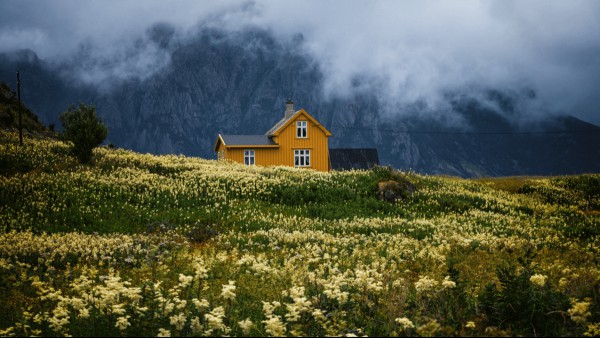
Admittedly, the case for learning Norwegian is hardly a numbers game. Norway is the only country where Norwegian is an official language, and its population barely exceeds 5 million people, who are also, for the most part, pretty proficient in English. So why learn Norwegian if you’re not planning on moving to Norway (which, by the way, has consistently been rated one of the best places to live in the world)?
If repatriation isn’t top of mind for you right now, you might find these arguments for learning Norwegian more convincing.
If pronunciation is the sort of thing that makes you balk at the prospect of learning a new language, you might be pleasantly surprised to learn that there’s more than one way to pronounce words in Norwegian — and more than one way to spell them, too! This could either be confusing or liberating, depending on your perspective. Norwegian has two written standards and no spoken standard; the spoken language is a loose conglomeration of regional dialects. So if you don’t nail your pronunciation right out of the gate, it’s not a huge deal. Norwegians are used to hearing words pronounced in different ways and asking each other for clarification.
One of the most compelling arguments for learning any of the Scandinavian languages is that you get three for the price of one. Danish, Norwegian and Swedish are all mutually intelligible, which means it’s possible for speakers of all three languages to understand each other without too much effort.
And if this is the main benefit you want to unlock, then Norwegian arguably makes the most sense to learn of the three. The written forms of Danish and Norwegian are almost identical because Norway was a part of Denmark from the 14th century to the 19th century, though they sound pretty different from each other these days. Norwegian and Swedish sound more alike, but the vocabulary tends to differ more. Norwegian has the best strategic advantage when it comes to understanding both of its neighbors.
Norwegian might be a relatively small language, but it has an outsized literary footprint. Whether you’ve been reading Knausgård or some of the other standout novels Norway’s authors have been churning out, it wouldn’t be the weirdest idea to learn Norwegian so you could experience them in their original form. James Joyce learned Norwegian so he could read the original versions of Henrik Ibsen’s works, so there’s something to that.
Why learn Norwegian if you’re a busy person, you ask? It might not consume as much of your time as you think. The language is full of pan-Germanic words that will strike you as being pretty familiar if you know your way around the English language. If you need further convincing, here’s a sample Norwegian grocery list: egg, kake, melk, pasta, poteter. Looks like you already understand Norwegian, am I right?
Norwegian is one of the easiest languages for native English speakers to learn for reasons we already mentioned, and also because the grammar is pretty easy. The word order is more or less the same as English, and there’s only one verb form per tense, so you don’t have to deal with dreaded conjugation tables.
Norway is a pretty enticing destination for reasons we’ve already outlined, but high standard of living aside, tourists also flock here to experience the natural wonders of the fjords, mountains, glaciers, waterfalls and Northern Lights. Sure, you can get by with English, but wouldn’t it be that much more enriching to experience everything this country has to offer through the linguistic perspective of the people who live there?

What makes language so endlessly fascinating is that it intersects with every other topic you can think of. Learning more about language also means le

“5-4-3-2-1-0 booster ignition and liftoff!” You’ve probably heard the familiar sounds of a spaceship launch countdown at some point, but there are ple

If you live in the United States and you didn’t know what a coup was before January 6, 2021, you’ve no doubt heard this word floated more

All languages are beautiful in their own way, but only a select few are often branded as “romantic.” French and Italian are perhaps the tw

If you’re studying the language in any capacity, it certainly wouldn’t hurt to learn how to talk about family in Indonesian. Family is an

As writers at Babbel, we love to read and accentuate the importance of books being accessible to everyone. We’re big proponents of libraries, in

People are naturally fascinated by Switzerland — and this admiration isn’t just a love for chocolate and mountain walks (all right, maybe a litt

When I was in middle school, I ran with a group of friends so tight that kids called us “the groupies.” I didn’t really understand what that meant—bei
We are a comprehensive and trusted information platform dedicated to delivering high-quality content across a wide range of topics, including society, technology, business, health, culture, and entertainment.
From breaking news to in-depth reports, we adhere to the principles of accuracy and diverse perspectives, helping readers find clarity and reliability in today’s fast-paced information landscape.
Our goal is to be a dependable source of knowledge for every reader—making information not only accessible but truly trustworthy. Looking ahead, we will continue to enhance our content and services, connecting the world and delivering value.