
How To Talk Like A Pirate On Talk Like A Pirate Day
The calendar has become inundated with Days. While there used to be pretty much just Mother’s Day, Father’s Day and a few others, today there’s a Nati

The first thing pretty much anyone learns when they first start studying Swedish is how to say hello, which is both pleasantly familiar and delightfully foreign if you’re an English speaker. In Swedish, people greet each other most often with a breezy hej, which might look confusing until you realize that it’s basically the same as “hey.” Easy enough, right? What if we told you that saying goodbye in Swedish is not, after all, that different from saying hello?
Every language contains a variety of parting phrases that are better suited for different situations, which can add to the complexity. Here are the most common ways to say goodbye in Swedish, as well as some tips to help you make sure you’re using them right.
Whether you’re in a formal or informal setting, the most common and straightforward way to say goodbye in Swedish is hej då. It’s just like “hey” (or hej), but with an extra syllable tacked on. Basically, if you only remember one phrase from this whole article, this one will serve you in just about any context.
Of course, you came here for the complete collection, so here are a few other formal goodbyes that — full disclosure — you’ll almost never hear used in an everyday conversation because they’re considered somewhat antiquated or stilted.
Although hej då will work perfectly fine in more relaxed company, you also have other, less stilted options to work with.
There are different ways of saying “see you later” if you feel like changing it up, or leaving on a note of “we’ll see each other soon.”
You can also sign off with a kiss — literally and not literally. Swedes will sometimes end phone calls and messages to their loved ones with Puss!, which literally translates to “Kiss!”
Now that you’ve got a basic sense of how to say goodbye in Swedish, here are a few examples of how to work these into more complex sentences.

The calendar has become inundated with Days. While there used to be pretty much just Mother’s Day, Father’s Day and a few others, today there’s a Nati
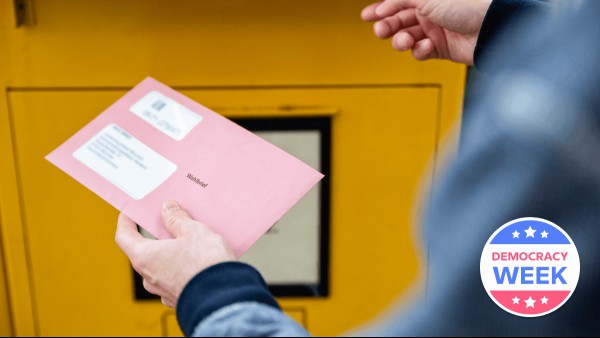
Voting in the United States (and around the world) looks quite a bit different this year due to the COVID-19 pandemic. Usually the vast majority of pe

Can you own a word? There are plenty of things that make sense to trademark, like a brand name or a logo, but you enter a more contentious territory w

When your first language is English, learning how to figure out grammatical gender is a pretty difficult task. You’re learning Spanish, and all

Ah, music. Isn’t it wonderful? Music and lyrics can take you on the proverbial rollercoaster ride of emotion, from being madly in love to being

It’s the end of a long day and you have two options before you: do you do a few Indonesian lessons or watch television? Turns out, you don’

Just as there’s a wide range of ways to greet someone in Turkish, so, too, are there various ways to say goodbye in Turkish. A lot depends on ho

No language is a monolith. If you travel around the world and you only talk to English speakers the whole time, you’ll hear countless variations on th
We are a comprehensive and trusted information platform dedicated to delivering high-quality content across a wide range of topics, including society, technology, business, health, culture, and entertainment.
From breaking news to in-depth reports, we adhere to the principles of accuracy and diverse perspectives, helping readers find clarity and reliability in today’s fast-paced information landscape.
Our goal is to be a dependable source of knowledge for every reader—making information not only accessible but truly trustworthy. Looking ahead, we will continue to enhance our content and services, connecting the world and delivering value.