
9 Harmless Words That Started As Offensive Insults
It’s not too surprising to learn about how language changes, but it can be a bit more strange to learn about how much it can. Words that we
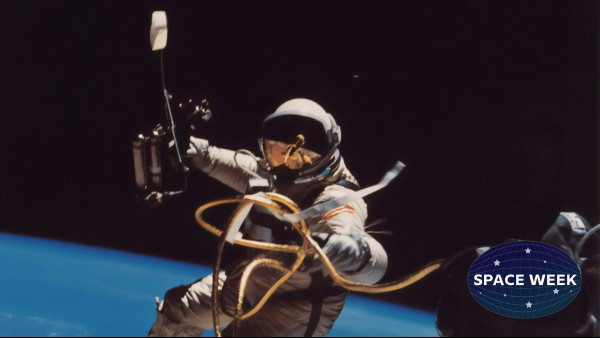
“5-4-3-2-1-0 booster ignition and liftoff!” You’ve probably heard the familiar sounds of a spaceship launch countdown at some point, but there are plenty of other space-related words and phrases that may be totally unintelligible to you. Astronaut lingo has been around as long as NASA itself. In fact, some of the earliest space slang was pretty hilarious, like referring to Cape Canaveral as “Malfunction Junction” or an astronaut’s adjustable seat as a “barber chair.”
Astronaut lingo has toned down quite a bit since the 1960s, and now it largely comprises jargon words and acronyms to describe technical aspects of spaceships and interstellar travel. While most of it’s only really useful if you plan to join NASA or visit the International Space Station, there are a few pieces of slang that have made it into our general lexicon. What may have started in outer space eventually became popular among civilians down on Earth.
This list, which is by no means comprehensive, will introduce you to some of the most common or interesting astronaut lingo. And if you can’t get enough of outer space linguistics, check out this explanation of where some common space exploration terms originated.
abort — to cut short or cancel a mission, first used in reference to space-flight in 1946
airlock — a room with two doors that allows astronauts to enter and exit a spacecraft without letting air out
command module — the compartment of a spacecraft that carries the crew, communications equipment and controls
downlink — radio signal sent to Earth from a spacecraft
glitch — a hitch, snag or malfunction; now used universally
keyhole — a part of the sky where an antenna cannot track a spacecraft due to technical limitations
liftoff — when a rocket leaves the launch pad and begins its flight into space
L minus (L-) — refers to the days, hours and minutes left until launch (L-0). T minus (T-) refers to the time remaining until launch on the official countdown clock. L- time and T- time are usually synced.
LOX — stands for liquid oxygen, which, when combined with fuel, creates a propellant that can be used to launch a rocket
nadir — the downward direction from a spacecraft to the center of a planet below (opposite the zenith)
puffy head bird legs — the feeling of a congested head and wobbly legs astronauts get upon the loss of gravity, which allows the fluid in their bodies to move around
screw the pooch — to make an embarrassing mistake (and yes, this phrase did originally come from NASA)
some words — instructions or advice given between astronauts and ground control, as in “We have some words for you about the signal light issue”
Spacecraft Event Time (SCET) — local time for events that happen aboard the spacecraft (the time on Earth minus the elapsed time between Earth and the spacecraft)
uplink — radio signal sent to a spacecraft from Earth
zenith — the point on a planet directly above the spacecraft (opposite the nadir)
zero gravity — the weightlessness astronauts experience in space due to an apparent absence of gravity (though gravity is still technically in effect)
Header Photo by The New York Public Library on Unsplash

It’s not too surprising to learn about how language changes, but it can be a bit more strange to learn about how much it can. Words that we

The age of talking robots is here. Amazon Alexas and Google Assistants are popping up in homes, and most smartphones come with a voice assistant that

The English language is a patchwork. Despite being a Germanic language, its linguistic influences come from all over. Words we use every day might hav

Depending on how you look at it, January 1 might be just another day. But there’s something about flipping the calendar to a brand new year. It

At some point in every language learner’s journey — often very early on — a situation arises that you’ll wish to express polite regret for

Turkish is a fascinating language, even though it’s not necessarily an obvious choice for second-language study. But if you’re curious and

No language is a monolith. If you travel around the world and you only talk to English speakers the whole time, you’ll hear countless variations on th

When I was in middle school, I ran with a group of friends so tight that kids called us “the groupies.” I didn’t really understand what that meant—bei
We are a comprehensive and trusted information platform dedicated to delivering high-quality content across a wide range of topics, including society, technology, business, health, culture, and entertainment.
From breaking news to in-depth reports, we adhere to the principles of accuracy and diverse perspectives, helping readers find clarity and reliability in today’s fast-paced information landscape.
Our goal is to be a dependable source of knowledge for every reader—making information not only accessible but truly trustworthy. Looking ahead, we will continue to enhance our content and services, connecting the world and delivering value.