
How To Talk About Tech And The Internet In Polish
The internet is a vast resource for learning, which also happens to be the most distracting place in the world to learn anything. One minute you’

The first thing you need to understand about saying sorry in Russian is that if you’re American, your internal gauge of “how often it’s appropriate to apologize” will probably require a bit of dialing back in Russian. It’s no secret that Americans apologize a lot, and this might not translate that well in a language like Russian, where brief apologies usually suffice and aren’t usually belabored more than necessary.
More often than not, a quick “excuse me” is the polite and expected choice, but as with most things, it all depends on the context. Here are a couple of the most common ways to say sorry in Russian.
You’ll hear this one less often than the other words below, and that’s because it’s used to express genuine feelings of remorse or sympathy (in the sense of “I’m sorry something bad happened to you.”). In other words, save this one for when you really mean it.
Мне жаль. — I’m sorry.
Мне очень жаль. — I’m so sorry.
More often than not, you’ll hear some form of this word, which in its noun form translates to “apology”: извинение
However, when expressed in the following forms, it can also be more directly translated as “excuse me” as well as just “sorry.”
Извините (formal)
Извини (informal)
To make it sound a little more formal or sincere, you can also say Я извиняюсь, or “I apologize.”
Some etymological insight: this comes from the word вина, which means “fault” — so you’re basically saying “remove my fault.”
Here are some example phrases to give you a better sense for the types of situations you might use it in.
While извини or извините might make more sense in a situation where you made a small mistake or the other person doesn’t actually seem that offended, there’s another word you can use when you wish to acknowledge that you made a mistake and you feel bad about the way it’s impacted someone.
This word means something closer to “forgive me.”
Простите (formal)
Прости (informal)

The internet is a vast resource for learning, which also happens to be the most distracting place in the world to learn anything. One minute you’

To start with a word to the wise: Italians are not prone to the sort of over-apologizing that’s customary in American or Canadian culture. At th

As a newcomer to Denmark or to the Danish language, you might be confused when you hear people saying “hi hi” whenever they part. Then aga
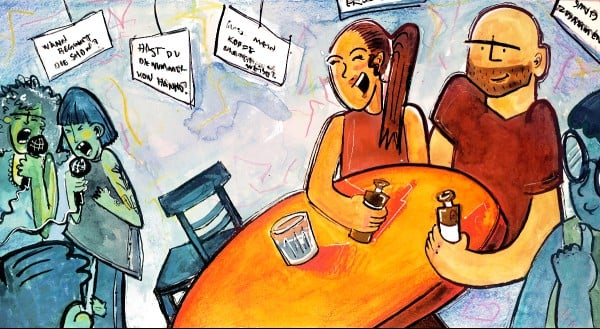
Illustration: Daniel Marin MedinaWhen looking for the perfect tandem partner, it’s easy to feel like Goldilocks. When I moved to Berlin seven years ag

Subscribe to Multilinguish on Apple Podcasts, Spotify, Google Play, Stitcher or wherever you listen. How do you tell the story of a language? It’

Language is kind of a huge deal. Without it, there wouldn’t be, well, language. Or anything that depends on language, like literature, documente

People are naturally fascinated by Switzerland — and this admiration isn’t just a love for chocolate and mountain walks (all right, maybe a litt

In the pitch darkness, as the hammock swing swayed slightly with the buffets of summer winds, my husband of one year tried to choke back tears of disa
We are a comprehensive and trusted information platform dedicated to delivering high-quality content across a wide range of topics, including society, technology, business, health, culture, and entertainment.
From breaking news to in-depth reports, we adhere to the principles of accuracy and diverse perspectives, helping readers find clarity and reliability in today’s fast-paced information landscape.
Our goal is to be a dependable source of knowledge for every reader—making information not only accessible but truly trustworthy. Looking ahead, we will continue to enhance our content and services, connecting the world and delivering value.